





Electric Water Pumps
Why Replace a Mechanical Water Pump?
The traditional mechanical water pump is one of the last remaining belt-driven components on modern engines — a legacy design carried over from the earliest automotive technology. While reliable, it is inherently inefficient.
A mechanical pump runs at engine speed, regardless of actual cooling demand.
-
Highway driving: Engine RPM is high, but natural ram-air provides significant cooling. The mechanical pump continues spinning fast, delivering excessive coolant flow while unnecessarily consuming engine power.
-
Heavy traffic & high ambient temperatures: Engine RPM is low, yet cooling demand is high. Unfortunately, the belt-driven pump is also turning slowly — precisely when increased coolant circulation is needed most.
In short, the mechanical water pump delivers maximum output when cooling demand is low, and minimum output when cooling demand is high.
The EWP® eliminates this inefficiency.
By operating independently of engine speed, the EWP® (Electric Water Pump) provides maximum cooling when it’s actually required — improving thermal control, reducing parasitic power loss, and increasing overall efficiency.
Intelligent Cooling with the EWP® & Fan Digital Controller
(12V & 24V Models | Patents: USA 6425353, EU 1133624, AUS 756453)
When paired with the EWP® & Fan Digital Controller, cooling becomes fully demand-based and temperature-controlled.
The controller:
-
Continuously monitors engine temperature
-
Modulates pump speed by varying supply voltage
-
Actively “hunts” and maintains a user-defined target temperature
-
Adjusts pump speed dynamically for traffic, throttle, and load conditions
-
Maintains stable engine temperature independent of engine RPM
- Colour LCD
Automatic Fan Management
If the EWP® alone cannot maintain the target temperature, the controller automatically activates the electric cooling fan once the engine exceeds:
+3°C (+5.4°F) above the set temperature
This ensures consistent thermal stability under extreme conditions.
After-Run Cooling (Heat Soak Protection)
To prevent damaging heat soak after shutdown, the controller allows the EWP® and fans to continue operating:
-
For up to 3 minutes, or
-
Until temperature drops 10°C (14°F) below the set point
This protects critical engine components and improves long-term reliability.
Expanding Beyond Internal Combustion
With the rapid growth of electric and hybrid vehicle systems, demand for precise thermal management has never been greater.
The EWP® is ideally suited for:
-
Lithium-ion battery pack cooling
-
Electric & hybrid drive systems
-
Closed-circuit condenser cooling
-
Chiller and A/C circulation systems
Controlled by a patented digital management system, the EWP® modulates coolant flow in response to selected temperatures — delivering optimal efficiency, precise thermal stability, and reduced energy consumption.
Smarter Cooling. Greater Efficiency. Complete Thermal Control.
The EWP® transforms cooling from a passive, engine-speed-dependent system into an intelligent, demand-driven solution engineered for modern performance and emerging technologies.
Benefits of an Electric Water Pump
Superior Temperature Control
The primary advantage of installing an EWP® (Electric Water Pump) is precise engine temperature management.
Unlike mechanical pumps that operate purely at engine speed, the EWP® delivers cooling based on actual demand. This helps resolve overheating issues while maintaining stable and consistent operating temperatures across all driving conditions.
Reclaim Lost Engine Power
A mechanical water pump is belt-driven, meaning it constantly draws power from the engine — even when full cooling capacity isn’t required.
By replacing it with an EWP®, you eliminate parasitic power losses and reclaim usable engine power.
The Result:
-
Increased horsepower
-
Improved torque
-
Better fuel efficiency
Mechanical pump power consumption increases exponentially with engine speed. In fact, power draw rises with the cube of pump speed:
-
Doubling speed from 600 RPM to 1200 RPM increases power consumption eightfold
-
Doubling again to 2400 RPM increases it another eight times
This escalating power drain continues all the way to maximum engine speed.
By removing the mechanical pump, that lost energy is returned to the drivetrain — delivering measurable performance gains.
Potential Gains:
-
Up to 10kW of additional power
-
Estimated 3.5%–10% fuel savings
Proven Efficiency
Major European vehicle manufacturers have adopted electric water pumps as standard equipment in select models — a testament to their efficiency and performance advantages.
Independent research shows that an EWP® can use up to 90% less energy than a conventional mechanical pump system.
Additional Advantages
Beyond performance and efficiency, the EWP® offers several long-term benefits:
-
Faster engine warm-up
-
Reduced emissions
-
Improved thermal stability
-
Elimination of engine heat soak
-
Extended engine life
Significant Weight Reduction
Weight savings are critical for both performance and fuel efficiency.
-
EWP® weight: 900g – 1,151g (model dependent)
-
Typical mechanical pump: 3kg – 5kg
Not only is the EWP® considerably lighter, but its universal and flexible mounting options also allow easier placement within crowded engine bays — freeing up space for additional performance modifications.
Upgrade to Intelligent Cooling
Replacing a mechanical water pump with an EWP® delivers:
-
Smarter cooling
-
More power
-
Better fuel efficiency
-
Lower emissions
-
Reduced weight
It’s a modern solution designed for performance, efficiency, and long-term reliability.
Choosing the Right EWP® for Your Engine
The size and cooling demands of your engine will determine the most suitable EWP® (Electric Water Pump) for your application.
Davies Craig’s patented range of Electric Water Pumps is available in multiple flow capacities to suit everything from daily drivers to high-performance and heavy-duty engines.
Available Flow Rates:
-
From 90 L/min (23.8 gal/min)
-
Up to 180 L/min (47.5 gal/min)
Models are available in both 12V and 24V configurations, with housing options in high-strength Nylon 66 or Alloy to suit different environments and performance requirements.
Designed for Universal Fitment
EWP® units are engineered for versatile installation. They can:
-
Replace an existing mechanical belt-driven water pump
-
Be installed inline to complement an existing system
-
Suit a wide range of vehicle types and engine configurations
With straightforward, DIY-friendly installation, upgrading to an electric water pump is simpler than ever.
Flexible Cooling Solutions for Every Application
Whether you’re building a street performance vehicle, motorsport application, marine setup, or heavy-duty cooling system, there’s an EWP® designed to deliver the right flow for your engine.

| EWP® SALES CONFIGURATION | ||
| EWP® Only | EWP® Kit | EWP® Combo |
|
The EWP® Pump-Only option is ideal for replacement, intercooler, charge cooler, or auxiliary water pump applications where wiring is already installed or custom-built. Perfect for seamless integration into performance, motorsport, or custom cooling systems. |
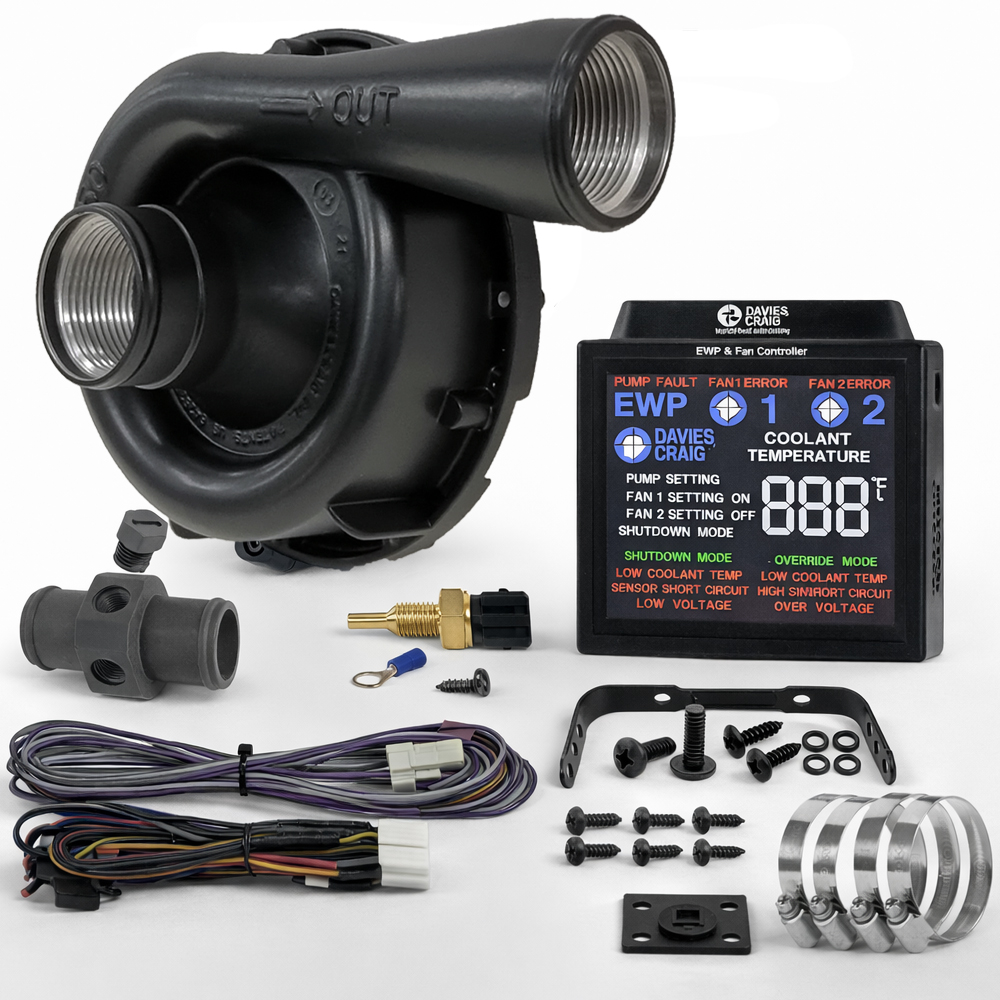
The EWP® Kit is a convenient, all-in-one solution for new electric water pump installations, particularly suited to intercooler and auxiliary cooling applications where simple on/off control is preferred. Each kit includes the essential components required to install and wire the EWP® into your system, making setup straightforward and hassle-free. |
The EWP® Combo Configuration is the ideal solution for a full electric water pump conversion. This setup allows you to remove or disengage the mechanical belt-driven water pump and, in most applications, eliminate the factory mechanical thermostat — delivering precise, fully controlled cooling system performance. By converting to an EWP® Combo system, you gain optimal temperature management, improved efficiency, and complete control over your engine’s cooling strategy. |
 |
 |
 |
| SPECIFICATION ELECTRIC WATER PUMP (EWP®) |
|||||||
|
EWP® Model |
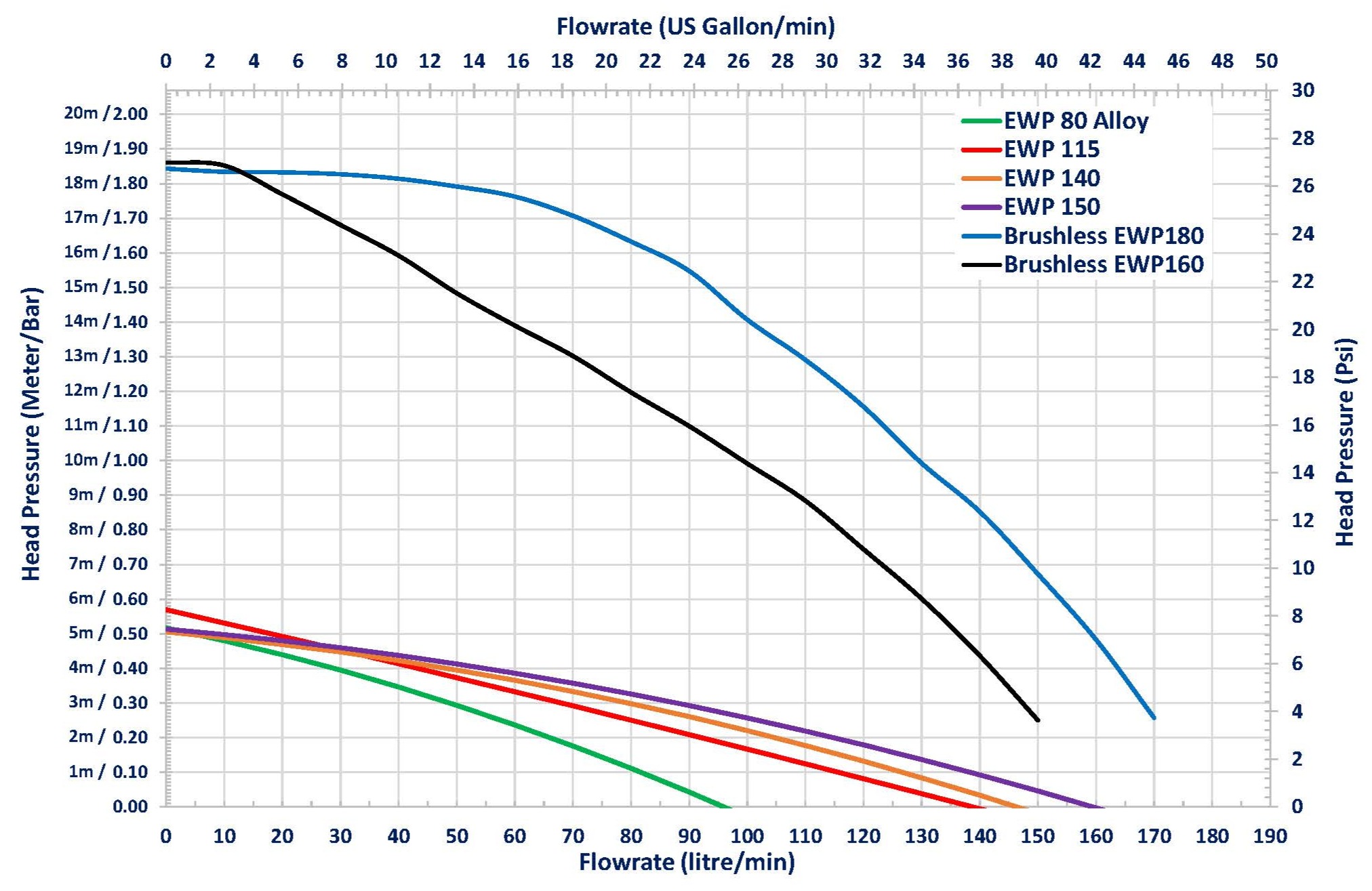
EWP®80 | EWP®115 | EWP®140 | EWP®150 | Brushless EWP®160 |
Brushless EWP®180 |
|
| Open Flow Rate | 90 l/min 23.8 g/min |
139 l/min 36.7 g/min |
147 l/min 38.8 g/min |
162 l/min 42.8 g/min |
160 l/min 42.3 g/min |
180 l/min 47.6 g/min |
|
|
Body Material |
Aluminium | Nylon 66 or Aluminium | Aluminium | Aluminium | Aluminium | Aluminium | |
| Rated Voltage | 12V | 13.8V to 16V | 13.8V to 16V | 13.8V to 16V | 13.8V to 16V | 9V to 19V DC | 9V to 19V DC |
| 24V | N/A | 25.6V to 28V | 25.6V to 28V | 25.6V to 28V | N/A | 18V to 32V | |
| Rated Current | 12V | 7.5 A | 10 A | 10 A | 10 A | 26 A | 33 A |
| 24V | N/A | 5.5 A | 5.5 A | 5.5 A | N/A | 17 A | |
| Fluid Temp | -40°c to 120°c -40°F to 248°F |
||||||
| Weight | 900g (2lbs) Nylon 1025g (2.26lbs) Alloy |
920g (2.03lbs) Nylon 1101g (2.43lbs) Alloy |
1,226g 2.7lbs |
1,107g 2.6lbs |
2,013g 4.4lbs |
2,013g 4.4lbs |
|
| Inlet & Outlet Fitting |
Nylon | Flange with 35mm (1 3/8") Push on barb |
38mm (1 1/2") Push on barb |
N/A | N/A | N/A | N/A |
| Alloy | 35mm (1 3/8") Push on barb |
38mm (1 1/2") Push on barb with 16AN ORB Fitting |
Flange 38mm (1 1/2") Push on barb with 16AN ORB Fitting |
38mm (1 1/2") Push on barb with 16AN ORB Fitting |
|||
| Internal Thread Specification |
N/A | N/A Nylon 1 5/16 -12 UN Alloy |
1 5/16 -12 UN 1 5/16 -12 UN |
||||
| Hose Fitment | 32mm to 38mm 1¼” to 1½” |
35mm to 41mm (1⅜ to 1⅝") |
|||||
| Hose Fitmment with Sleeve |
3mm | 38mm to 44mm 1½” to 1.73" |
41mm to 47mm (1⅝" to 1⅞) |
||||
| 6mm | 44mm to 5mm 1.73” to 2.05" |
47mm to 54mm (1⅞ to 2 ⅛") |
|||||
| Part Number 12 Volt |
Pump | 8106 Flange 8109 Barb |
8125 Nylon 8140 Alloy |
8180 Alloy | 8160 Sliver 8165 Black |
N/A | N/A |
| Kit | 8006 Flange 8009 Barb |
8025 Nylon 8040 Alloy |
8080 Alloy | 8060 Silver 8065 Black |
8430 | 8450 | |
| Combo | 8908 Flange 8919 Barb |
8930 Nylon 8950 Alloy |
8990 Alloy | 8970 Silver 8975 Black |
N/A | N/A | |
| Part Number 24 Volt |
Pump | N/A | #8126 Nylon #8141 Alloy |
8181 Alloy | 8161 Silver | N/A | N/A |
| Kit | N/A | N/A | N/A | 8061 Silver | N/A | 8451 | |
| Combo | N/A | N/A | N/A | 8971 Silver | N/A | N/A | |
| PRODUCT SELECTION GUIDE by Part Number Electric Water Pump (EWP®) |
|||||||
| APPLICATION |
PUMP MODEL |
PUMP ONLY | PUMP KIT | PUMP COMBO | |||
| 12V | 24V | 12V | 24V | 12V | 24V | ||
| Engines up to 2.0L (Standard) |
EWP®80 | 8106 Flange 8109 Barb |
N/A | 8006 Flange 8009 Barb |
N/A | 8908 Flange 8919 Barb |
N/A |
| Engines up to 2.0L - 3.5L (Standard) |
EWP®115 | 8125 Nylon 8140 Alloy |
8126 Nylon 8141 Alloy |
8025 Nylon 8040 Alloy |
N/A | 8930 Nylon 8950 Alloy |
N/A |
| Engines up to 3.5L - 5.0L (Standard) |
EWP®140 | 8180 Alloy | 8181 Alloy | 8080 Alloy | N/A | 8990 Alloy | N/A |
| Engines 5.0L or greater (Standard) Modified Engines Supercharged/Turbo, Drag Racing, 4WD, Off Road, Drifting & Speedway |
EWP®150 | 8160 Sliver 8165 Black |
8161 Silver | 8060 Silver 8065 Black |
8061 Silver | 8970 Silver 8975 Black |
8971 Silver |
| Intercooler (depending on capacity) |
EWP®115 | 8125 Nylon 8140 Alloy |
8126 Nylon 8141 Alloy |
8025 Nylon 8040 Alloy |
N/A | 8930 Nylon 8950 Alloy |
N/A |
| EWP®140 | 8180 Alloy | 8181 Alloy | 8080 Alloy | N/A | 8990 Alloy | N/A | |
| EWP®150 | 8160 Sliver 8165 Black |
8161 Silver | 8060 Silver 8065 Black |
8061 Silver | 8970 Silver 8975 Black |
8971 Silver | |
| EWP®160 | N/A | N/A | 8430 | N/A | N/A | N/A | |
| EWP®180 | N/A | N/A | 8450 | 8451 | N/A | N/A | |
EWP® Installation Options
Electric Water Pumps (EWP®) offer flexible installation methods to suit a wide range of vehicles and performance goals. Whether used to enhance an existing cooling system or fully replace a mechanical pump, an EWP® delivers improved cooling efficiency, reduced engine load, and potential fuel savings.
Auxiliary or Replacement Installation
An EWP® can be installed in two primary ways:
Auxiliary Pump (Recommended for simple upgrades)
Installed alongside the factory belt-driven pump, the EWP® significantly boosts coolant flow and heat dissipation.
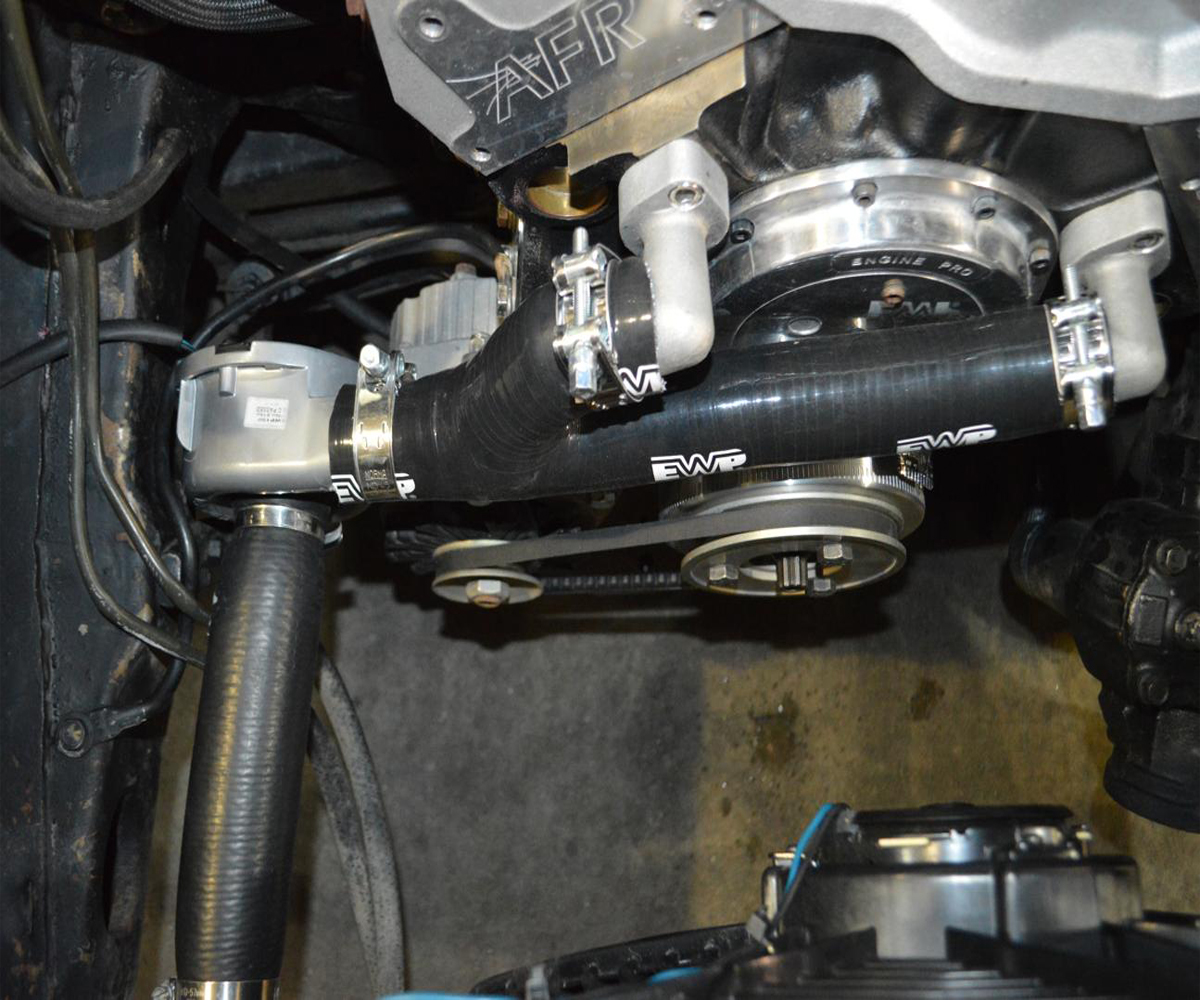
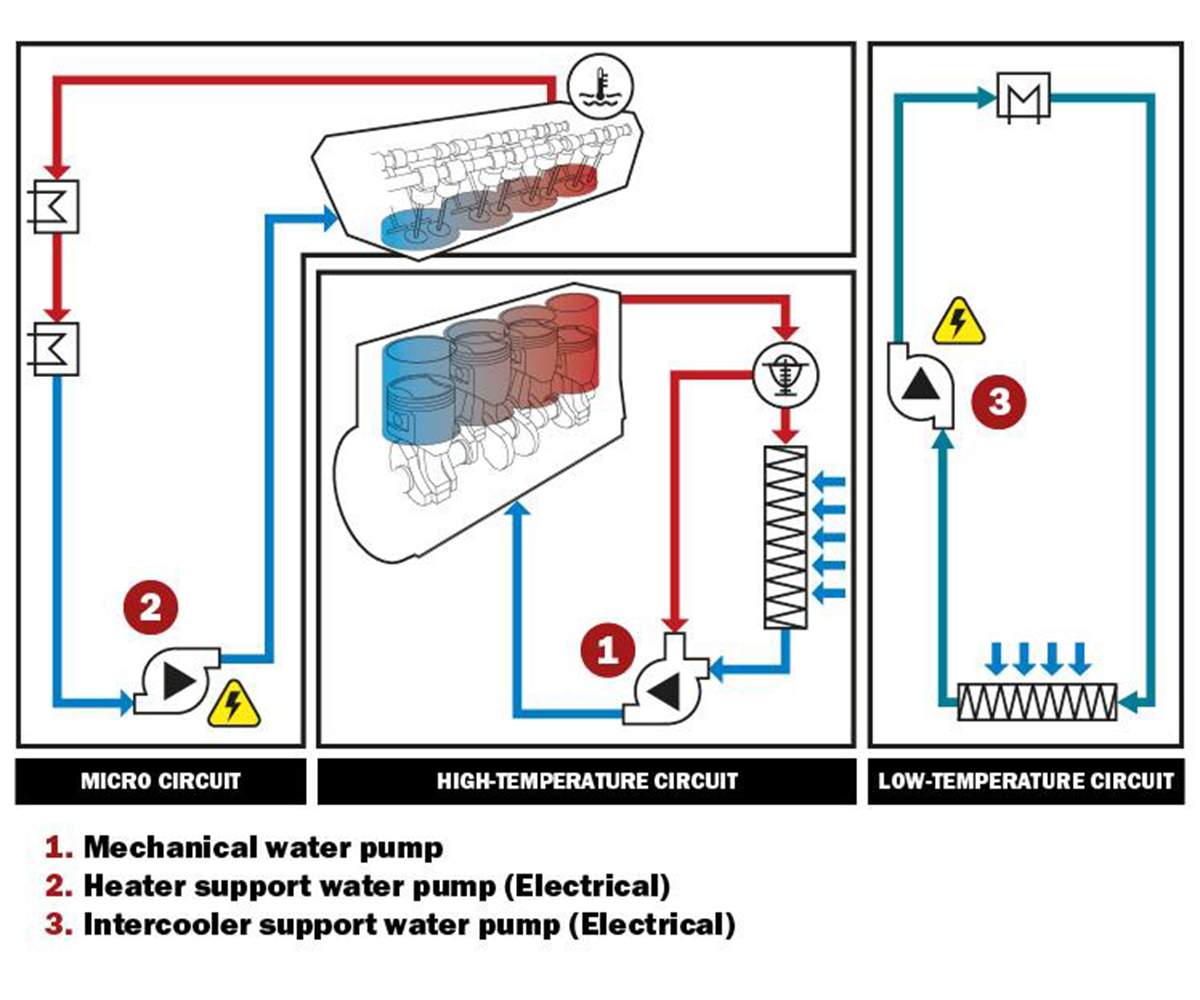
- A short section (approx. 100mm / 4") is removed from the lower radiator hose
- The EWP® is inserted inline and secured
- Wired via a thermal switch or digital controller
- Can operate in conjunction with electric radiator fans
Performance benefit:
At idle, a mechanical pump typically circulates ~15 L/min. An EWP®150 can add up to 162 L/min, dramatically improving cooling and reducing heat soak.
Upgrading to a digital controller allows the pump and fans to continue running briefly after engine shutdown, helping prevent heat damage to critical components such as the head gasket.
Disabling the Mechanical Water Pump
This method retains the original pump housing but removes its function:
- Install the EWP® in the lower radiator hose
- Remove the factory thermostat
- Fit a shorter drive belt to bypass the pump pulley
Optional (continuous operation):
- Modify the thermostat by drilling two 3mm holes to allow constant coolant circulation
- Reinstall with a clean housing and new gasket if required
This approach offers a straightforward installation with minimal modification.
Disengaged Mechanical Water Pump (Recommended Setup)
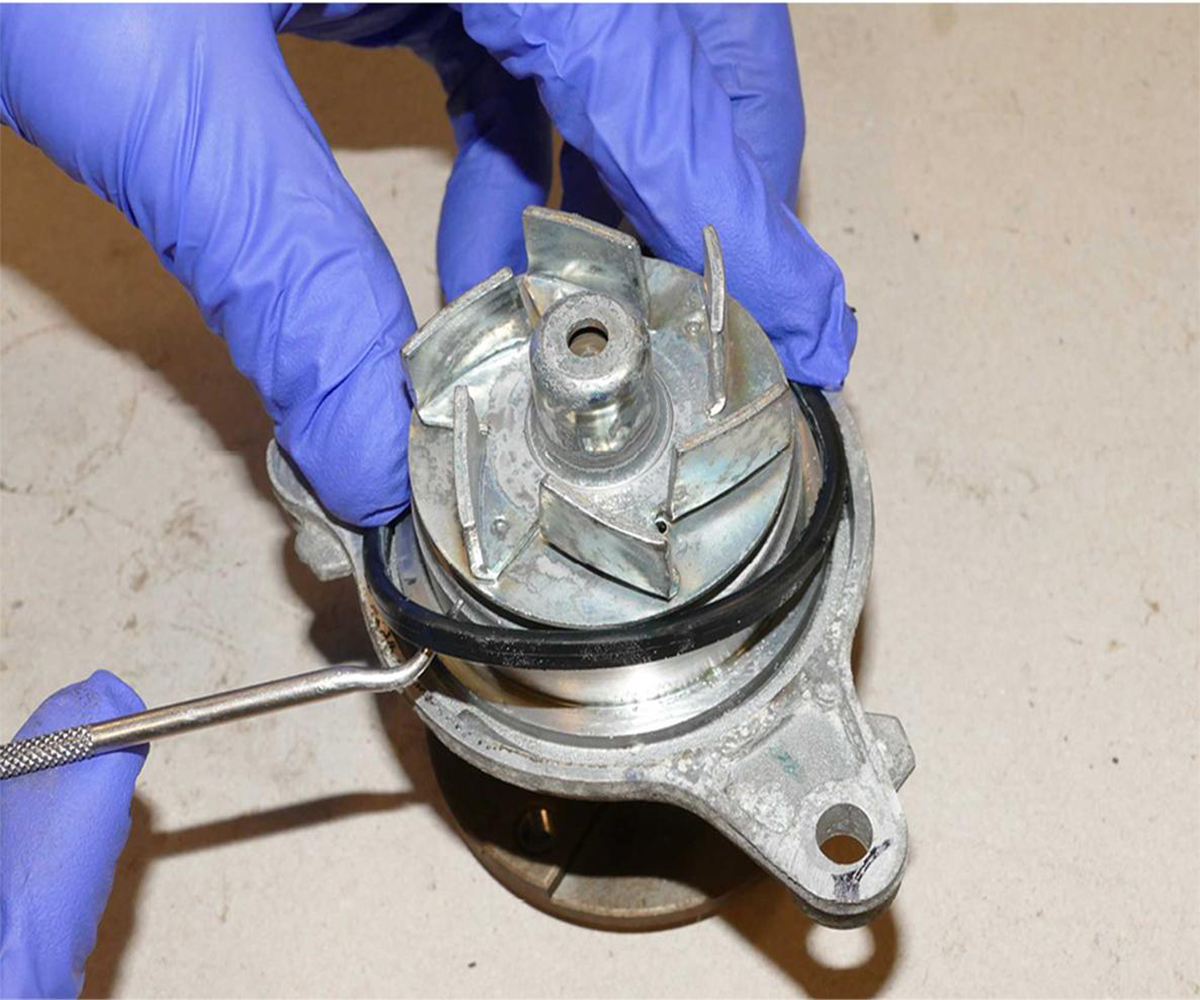
For improved efficiency while maintaining belt routing:
- Remove the thermostat and mechanical pump impeller
- Reinstall the pump housing to act as an idler pulley
- Block any bypass passages
- Install the EWP® in the lower radiator hose
This method reduces parasitic loss while avoiding major belt system changes.
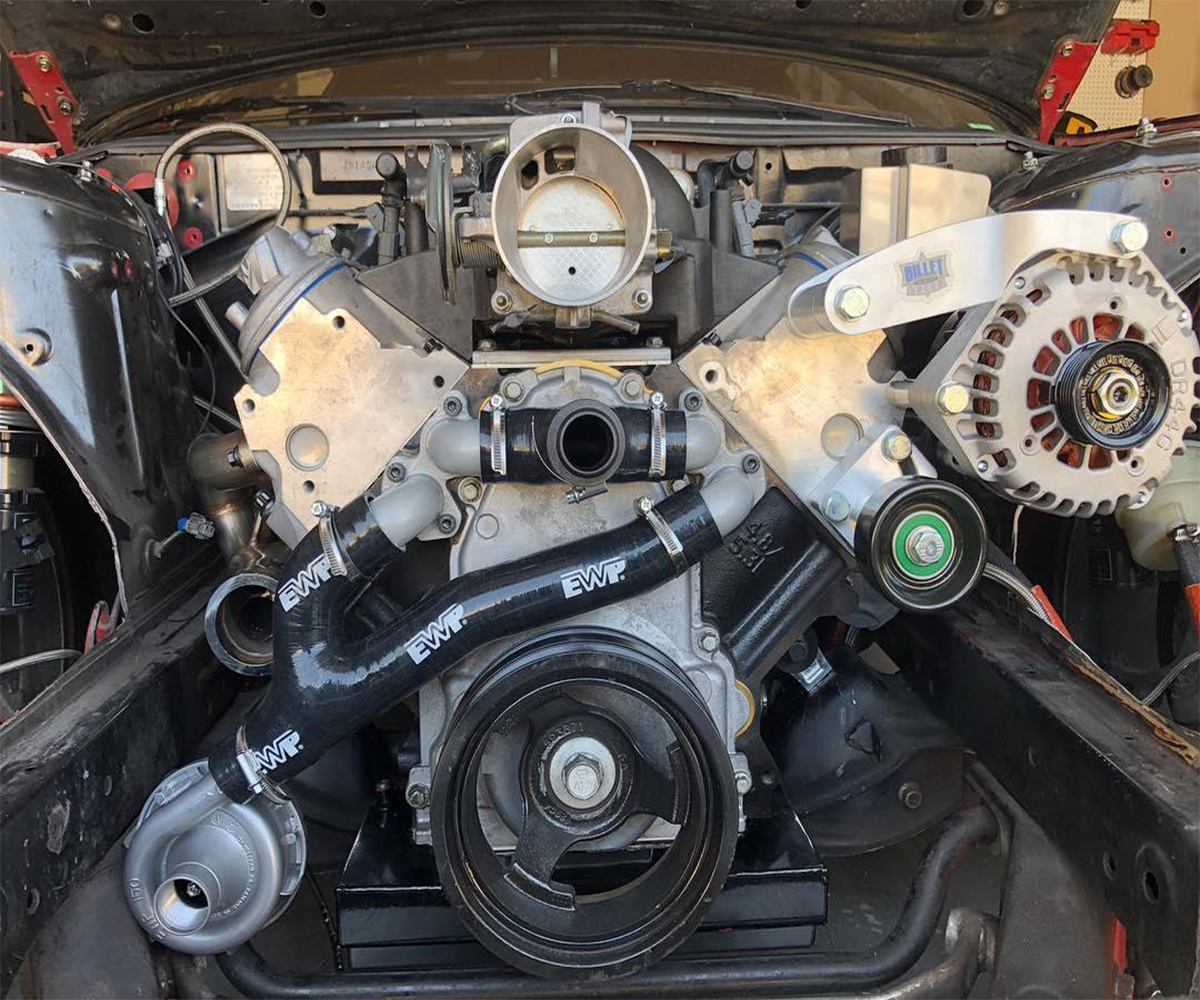
Full Removal of Mechanical Water Pump (Ideal Setup)
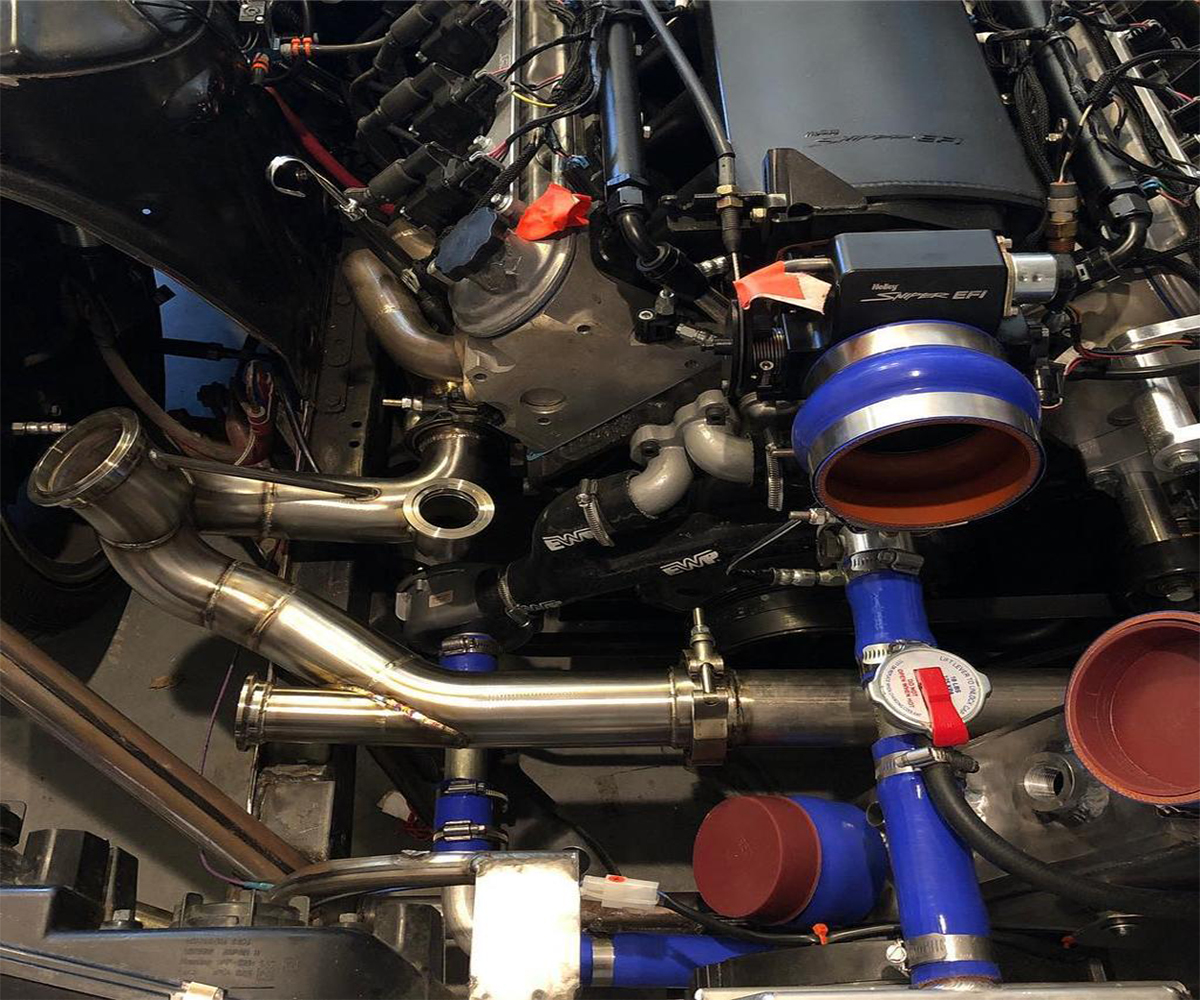
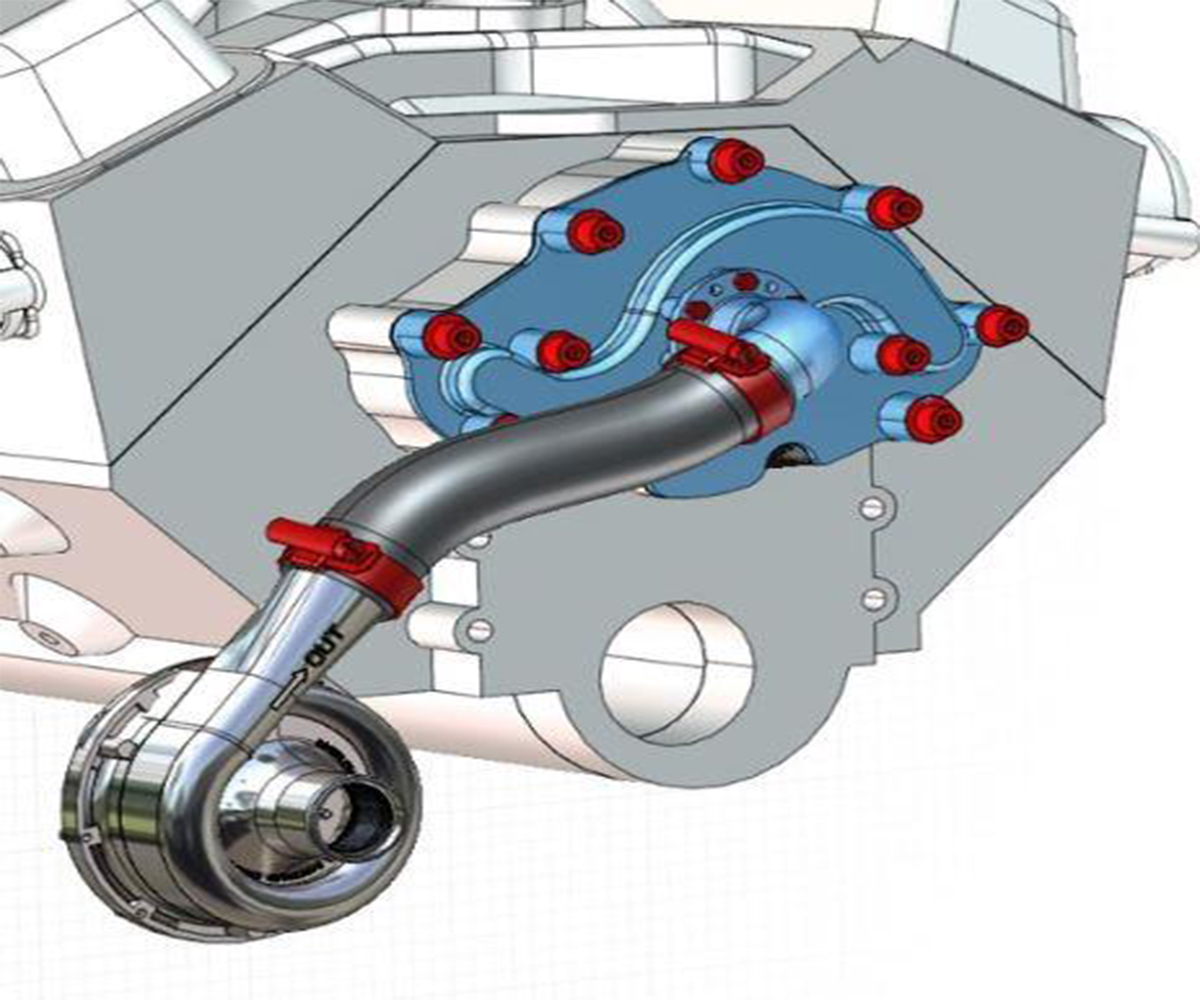
For maximum performance and efficiency:
- Remove the mechanical water pump and thermostat entirely
- Install a block adapter or blanking plate (not supplied)
- Modify or replace the radiator hose to suit EWP® installation
- Fit an appropriate belt to drive remaining accessories
This setup eliminates mechanical drag and delivers the greatest efficiency gains.
Mounting & Installation Notes
- In most installations, the EWP® is supported by the radiator hose
- Where additional mounting is required, soft mounting is essential to minimise vibration
- Recommended mounting kits:
- Part #8700
- Part #8710
(Suitable for EWP®115, EWP®140, and EWP®150 models)
Key Benefits of EWP® Systems
- Increased coolant flow and cooling performance
- Reduced engine load → improved power delivery
- Lower fuel consumption
- Improved engine protection during hot shutdown
EWP & CONTROLLER INSTALLATION DEMONSTRATION
- Davies, Craig recommends using Glycol 50% in water for all EWP® & EBP.
- Recommended viscosity range for all EWP & EBP: 100 mPa·s @ -30°C to 1 mPa·s @ 100°C
HOW TO MANAGE YOUR ELECTRIC WATER PUMP
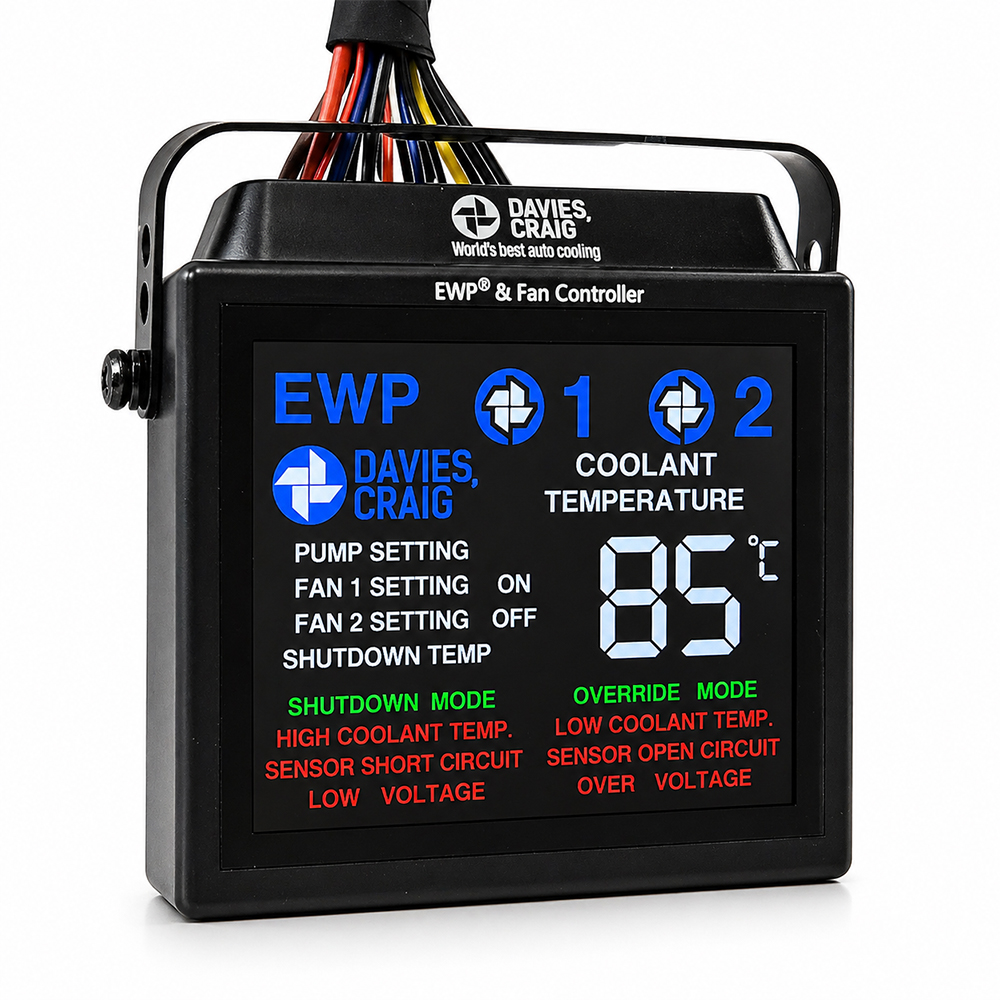


ELECTRIC WATER PUMP EWP® & FAN DIGITAL CONTROLLER
12 & 24 Volt | Part Number: #8003, #8103
Provides optimum control of Davies, Craig 12 / 24 Volt Electric Water Pumps and Electric Fans. It Will manage the operation of the EWP® by varying the speed of the pump in response to the coolant temperature and manage control of your electric engine fan.
Designed for precision, reliability, and ease of use, this next-generation controller features an intuitive colour LCD interface and enhanced functionality for complete cooling management.
Engineered to optimise electric water pump and fan performance, the 8003 delivers greater control, improved visibility, and smarter operation—ideal for performance, street, and motorsport applications.
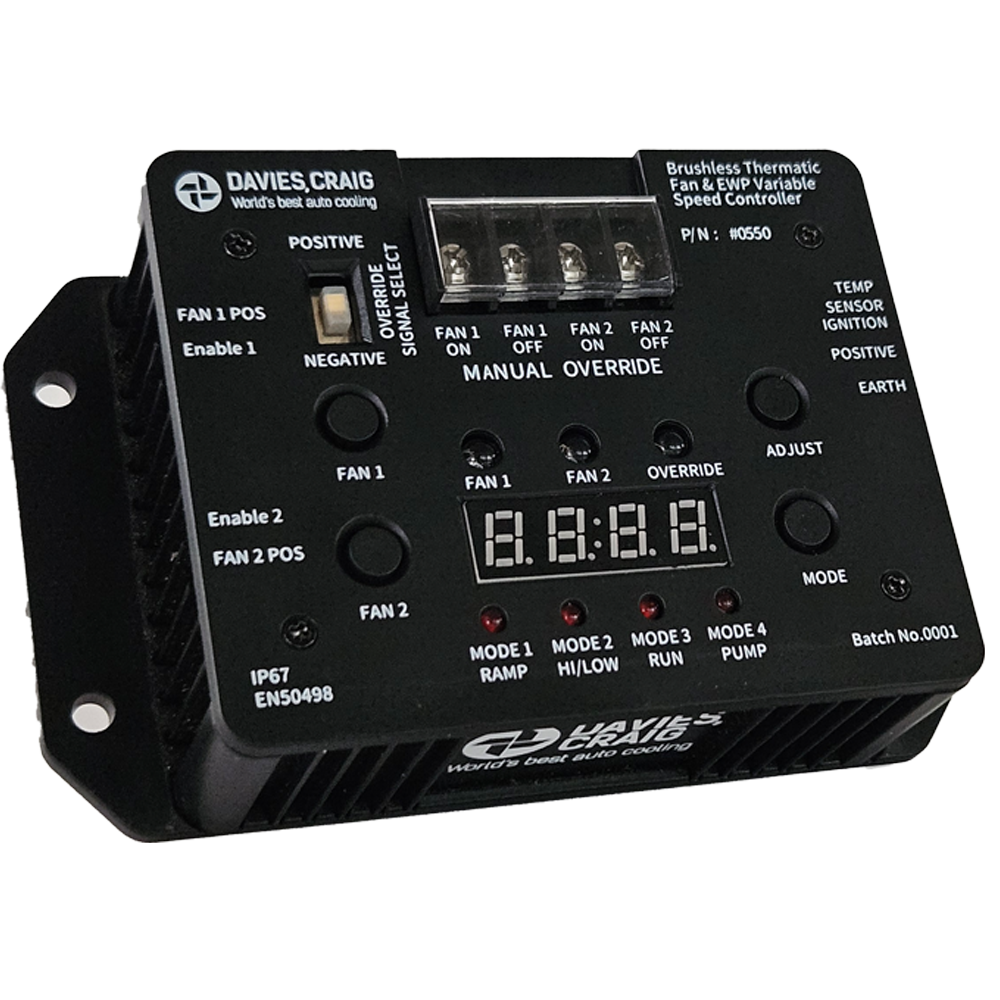
VARIABLE SPEED EWP® & FAN CONTROLLER
12 & 24 Volt | Part Number: #0550, 0551, 0555, 0556
Available for Brushed and Brushless Motor applications. High-performance Controller designed to optimise thermal management in automotive, industrial, marine and EV applications. It provides intelligent, precise control of either Brushless dual Thermatic® Electric Fans or Electric Water Pumps (EWP®), ensuring maximum, efficiency, system protection and reliable operation in the most demanding environments.
DIGITAL THERMATIC® EWP® & FAN SWITCHES
12 & 24 Volt | Part Number: #0444, 0445, 0448, 0435, 0438
Our very own designed Digital Thermatic® Fan Switch Kit can be used with our Thermatic Fans, EWP's and competitors Fans. This is a simple on / off switch that can run 1 or 2 fans and be used for 12 or 24 volt applications. It has an adjustable temperature range of 40ºC to 110ºC (104ºF to 230ºF) which can show Centigrade or Fahrenheit
EWP BLOCK ADAPTER KITS
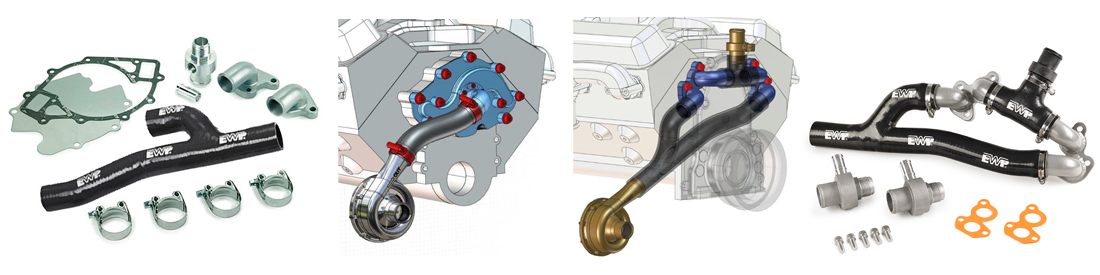
EWP® Block Adapter Kits are simply designed to complement the fitment of your EWP® Combo Kit.
If you’ve purchased an EWP® Combo Kit, then you will have an LCD EWP®/Fan Digital Controller with a built-in switch that will thermatically control the new electric Thermatic® Fan in unison with your new EWP®. Simple, easy-to-follow installation instructions are supplied to ensure the Davies, Craig EWP® Electric Water Pump Combo and EWP® Block-Adapter Kits are simply designed to complement the fitment of your EWP® Combo Kit.
EWP® Block Adapter Kits are assembled, mounted and perform in accordance with the product’s design.
